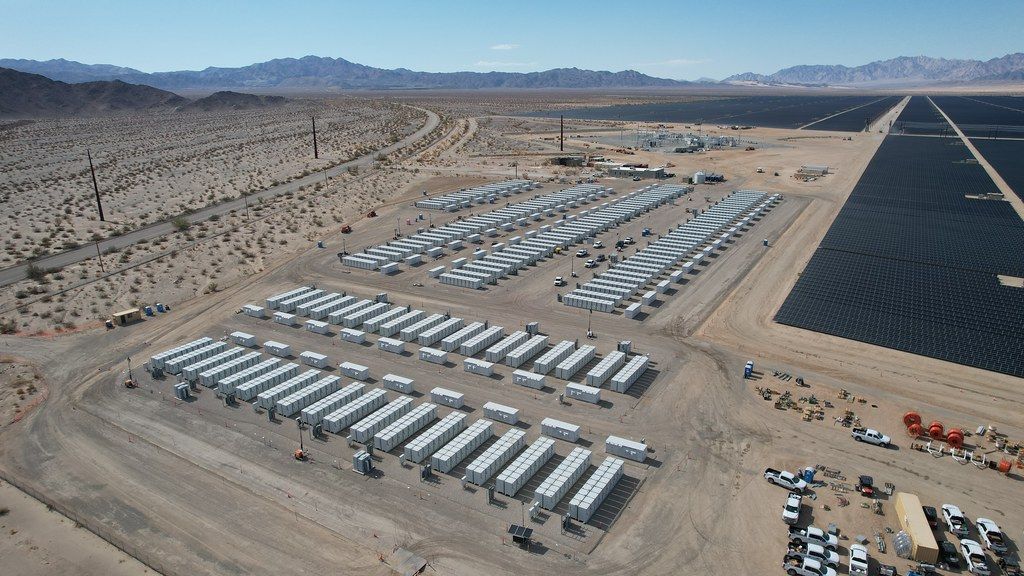
In 50 words: On November 4, 2026, the Union Cabinet approved ₹14,500 crore of viability gap funding for FY 2026-27 to 2030-31 to support 92 GWh of storage: 30 GWh of BESS, 60 GWh of pumped hydro and 2 GWh of other technologies. BESS projects must meet a 40% domestic content requirement.
The Union Cabinet has approved a Viability Gap Funding (VGF) Scheme for Development of Grid-Scale Energy Storage Systems with total support of ₹14,500 crore for FY 2026-27 to FY 2030-31. The scheme backs 92 GWh of storage capacity that is yet to be commissioned, with a total estimated investment of ₹97,600 crore.
What the scheme covers
| Item | What the Cabinet approved |
|---|---|
| Total support | ₹14,500 crore, FY 2026-27 to FY 2030-31 |
| Capacity supported | 92 GWh: 30 GWh BESS, 60 GWh pumped storage, 2 GWh other technologies |
| Estimated investment | ₹97,600 crore |
| How capacity is allocated | Tariff-based competitive bidding |
| Who gets VGF | Public and private distribution companies (BESS and pumped storage); public and private entities (other technologies) |
| Domestic content | Minimum 40% for BESS projects |
The government says the new capacity equals 170% of today's grid-scale storage, which implies about 54 GWh now, and that India needs 411 GWh of grid-scale storage by 2031-32.
What the numbers imply
The release does not give a support rate per MWh or say how the money splits between batteries and pumped storage. Two ratios follow from the totals:
- Average support: ₹14,500 crore over 92 GWh is about ₹15.8 lakh per MWh across all technologies.
- Share of investment: the VGF covers about 15% of the ₹97,600 crore estimated investment, an average of about ₹10,600 per kWh.
These are averages over very different technologies, not the rate any BESS tender will offer. The per-MWh rate will be set in the scheme guidelines and each tender.
What it means for BESS tariffs
Indian storage tenders are bid as a capacity tariff in rupees per MW per month, and VGF lowers the tariff a developer needs by cutting the capital it must recover. In our BESS tariff calculator, each ₹1 lakh of VGF per MWh lowers the tariff a 2-hour battery needs by about ₹1,570 per MW per month, at a 7% cost of capital over 20 years.
As an illustration only: if a 2-hour battery received the scheme-wide average of about ₹15.8 lakh per MWh, the tariff it needs at the calculator's default costs would fall from about ₹2.23 lakh to about ₹1.98 lakh per MW per month. The actual BESS rate may be higher or lower than the average.
The 40% domestic content requirement pulls the other way. Where Indian-made cells or systems cost more than imports, capex rises and some of the VGF benefit goes to covering it. Bidders can test both effects by changing capex and VGF in the calculator.
What to watch
- Scheme guidelines: the per-MWh VGF for BESS, the disbursement schedule and how the 40% domestic content is measured.
- Allocation: how the 30 GWh of BESS is divided between states and central agencies.
- First tenders under the scheme: whether discovered tariffs fall, as VGF suggests, or hold steady as domestic content adds cost.
Related
Sources
Researched and drafted by the Earth Energy Log Editorial Desk with AI assistance. Reviewed by Pruthvi A. before publication.
How we work: Editorial standards · AI disclosure · Report an error